| M | T | W | T | F | S | S |
|---|---|---|---|---|---|---|
| 1 | ||||||
| 2 | 3 | 4 | 5 | 6 | 7 | 8 |
| 9 | 10 | 11 | 12 | 13 | 14 | 15 |
| 16 | 17 | 18 | 19 | 20 | 21 | 22 |
| 23 | 24 | 25 | 26 | 27 | 28 | 29 |
| 30 | 31 | |||||
SSEA Webinars
April 2026
April SSEA-SRA Webcast Collaboration
Is College Still Worth It?: Exploring Alternative Paths into Emerging Adulthood
April 21, 2026; 2 – 3pm EST
This panel discussion, a collaboration between the Society for the Study of Emerging Adulthood and the Society for Research on Adolescence, will examine how the value of attending college for adolescents and emerging adults has shifted over time. Historically, young people were given the message that attending college was an essential step towards establishing a successful career. Indeed, daunting student debt was only a temporary stressor they would need to endure for the sake of gaining access to higher-paying jobs. And yet, research on the Millennial generation finds many identify as under-employed, assume tenuous “gig work” to make ends meet, and feel held back by loans they cannot pay off.
As they watch the economic consequences unfold for Millennials, adolescents and young emerging adults are beginning to question the value of higher education. Is it worth it to attend college if that means accruing debt, with no guarantee that will lead to good employment? How does an increasingly AI-dominated work environment shift job prospects? Is it still important to learn skills like writing, conducting research, and critical thinking? Is it smart to take a gap year before college to gain life experience before deciding whether to enroll? These questions, and more, are raised against an existing backdrop of enduring racial disparities in the pursuit and attainment of higher education, as well as growing alarm about gender disparities in college attainment on the horizon.
College has never been an accessible option for all young people. However, postsecondary study remains one of the most popular pathways for adolescents to follow after the end of compulsory education and has been frequently used as a setting to understand the self-discovery dynamics that characterize emerging adulthood. In light of a rapidly changing economic and technological landscape, panelists will present different perspectives on how contemporary young people are exploring alternative paths into emerging adulthood.
Panelists:
Chelsea Alexander, M.S. Doctoral Student, University of Illinois, Urbana Champaign
Jay Gosselin, Founder and Program Director, Discover Year: A Structured & Purposeful Gap Year www.discoveryear.ca
Larry Nelson, Ph.D., Professor, Brigham Young University
Moderator:
Karla Vermeulen, Ph.D., Associate Professor, SUNY New Paltz
Co-Hosts:
Daysi Diaz-Strong, Ph.D., Assistant Professor, Jane Addams College of Social Work, University of Illinois Chicago
Kaylin Ratner, Ph.D., Assistant Professor, University of Illinois, Urbana Champaign
Registration link:
https://uic.zoom.us/meeting/register/O7lijEg_R1OwcmtfRqvUIQ
Presenter Bios:
Chelsea S. Alexander
Chelsea S. Alexander is a Ph.D. student at the University of Illinois at Urbana-Champaign in the Human Development and Family Studies department. She is a proud graduate of a Historically Black University, Hampton University, where she studied sociology and economics. Her current research focuses on understanding and highlighting the contextual factors shaping the transition to adulthood among Black youth.
Jay Gosselin
Jay Gosselin is a coach, facilitator, speaker, and founder of MentorU Leadership Academy and Discover Year, a structured and purposeful gap year program offering a certificate in career and leadership skills for 17-21 year olds. With a background in counselling psychology and a passion for helping young people flourish, Jay is an advocate for purposeful education and delivered a 2018 TEDx Talk on this topic, now with over 150,000 views.
Larry Nelson
Larry Nelson, Ph.D., is a Professor in the BYU College of Family, Home, and Social Sciences School of Family Life. He studies factors that lead to flourishing or floundering in the transition to adulthood with a particular interest in parenting, social competence, social withdrawal, identity, beliefs, and culture. He also studies factors (e.g., parenting, culture, self-perceptions) related to children’s social development with an emphasis in shy and withdrawn behaviors in early childhood.
March 2026
“Cheating is Not Okay, But It’s Not Always Wrong”: How Students Make Sense of Academic Honesty
Although academic dishonesty has been identified as a worldwide problem for decades (Lupton et al., 2000), recent technological advances have made the ease of cheating a ubiquitous problem. Research has identified specific factors, such as perceptions of peer behavior (Zhou, et al., 2022), that contribute to cheating; however, this work has generally not examined the ways in which emerging adults think about the morality of cheating and the “hierarchy” of cheating infractions – now including differing attitudes about the use of AI. We will discuss a recent project that aimed to explore how students make meaning out of their own and others’ academic dishonesty and how such patterns might be related to larger beliefs about morality.
Presenters:

Tabitha Holmes, Ph.D. is an Associate Professor of Psychology at SUNY New Paltz. Her current research focuses on how emerging adults are influenced by the stories they construct and consume.
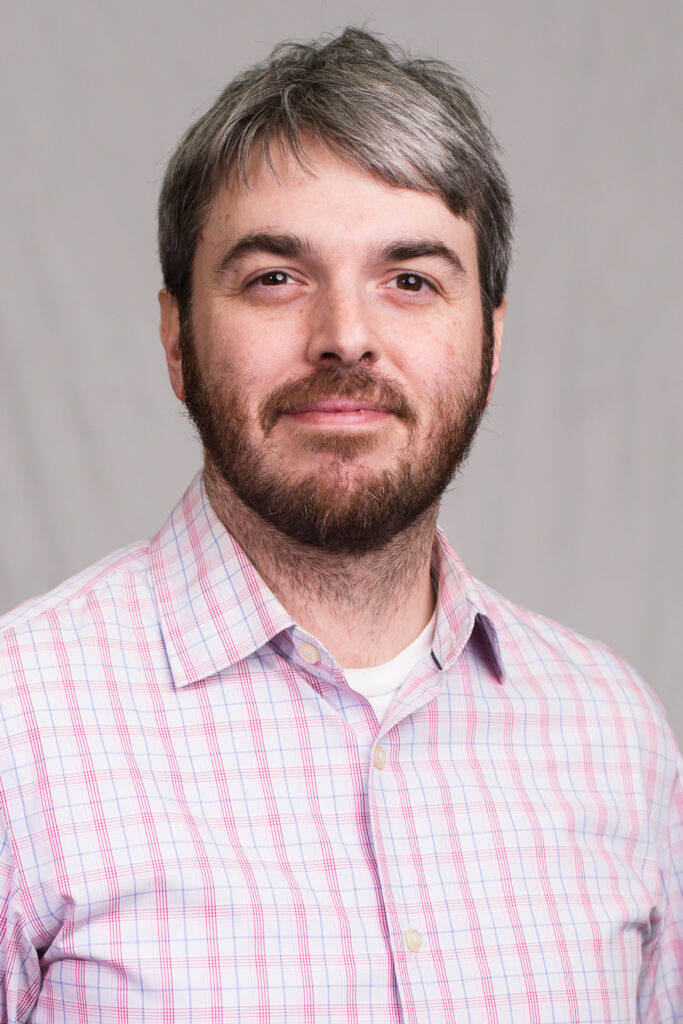
Matthew Wice, Ph.D. Is an Associate Professor of Psychology at SUNY New Paltz. His research examines cultural influences on social cognition and moral development.
Registration link: https://uic.zoom.us/meeting/register/0KY1zpuVRMq3xpZcitqyzA
Past Webinars
ISRI, in collaboration with our colleagues at SSEA, is excited to invite you to ISRI’s first webinar for the academic year of 2026.
Join us for a roundtable discussion titled: Crossing Borders, Shifting Selves: Conversations on Immigration and Identity Development
We will explore the history of the field, tracing the development of concepts and perspectives over time, key milestone findings, areas of consensus and debate, and developmental considerations, including during emerging adulthood, as well as the impact of social and educational policies and other influential factors.
With, (in alphabetical order):
Maya Benish Weisman, Hebrew University of Jerusalem
Daysi Ximena Diaz-Strong, University of Illinois at Chicago
Linda Juang, University of Potsdam
Seth Schwartz, University of Texas at Austin
Sophie Walsh, Bar Ilan University
April 2025
A Cross-National Analysis of the Labor of Emerging Adults in a Time of Widening Economic Injustice
Presenters:
Valérie Cohen-Scali, Ph.D., Conservatoire National des Arts et Métiers, Paris, France
Gabriela Aisenson, PhD., University of Buenos Aires (UBA), Argentina
Donna Marie San Antonio, EdD., Lesley University in Cambridge, MA, USA
Join Dr. Valerie Cohen-Scali, Dr. Gabriela Aisenson, and Dr. San Antonio to learn about international research on emerging adults without a diploma in seven developed and developing countries. The presenters will examine the differences and similarities of these young people’s representations of work as a function of different contextual and work situations and discuss implications for practice with social and economic justice at the ethical core of what we do as mentors, teachers, and counselors going forward.
Hosts: Byron G. Adams, Melissa Fenton
May 2025
Transitions to adulthood in sub-Saharan Africa: Comparative trends and case studies from coming-of-age in Senegal

Presenter: Luca Maria Pesando is Associate Professor of Social Research and Public Policy at New York University Abu Dhabi (NYU-AD). Before joining NYU-AD, he was an Assistant Professor of Sociology and Demography in the Department of Sociology and Centre on Population Dynamics, McGill University. His research lies in the areas of social, economic, and digital demography. He is interested in issues of family poverty, inequality, gender, social stratification, intra- and inter-generational processes, technology adoption, and interactions between life-cycle events and human capital accumulation. His overarching research aim is to produce better knowledge on the link between family change, gender, and educational inequalities in areas where these dynamics are changing rapidly and scant research is available.
Large-scale evidence suggests that, despite persistently high fertility, transition to adulthood markers have been delayed in sub-Saharan Africa. This study adopts a mixed-methods approach to investigate transition to adulthood markers in sub-Saharan Africa. We explore family formation trajectories among women and men in Senegal, as well as young adults’ narratives around delayed family formation. We do so by combining data from the Demographic and Health Surveys with rich longitudinal in-depth interviews among young Senegalese adults. Findings from quantitative analyses reveal a pronounced delay in age at first sex and age at first union, especially until the 1980s birth cohort, after which we observe a plateau. Findings from qualitative analyses identify three cross-cutting themes behind the observed delays, namely i) lack of economic preconditions for marriage, tied to labor-market insecurities and informality; ii) perceptions of adverse generational change, whereby young adults witness higher hardship today vis-à-vis their parents’ generation, and iii) ambivalent dynamics of strong social control in extended family networks.
- Share on